In modern Occupational Health and Safety (OHS) management, workplace accidents caused by slipping, tripping, and falling are among the biggest risks in various industries. Production floor surfaces exposed to oil, project areas flooded with water, or processing environments with mild chemicals are examples of highly hazardous conditions. For companies, the impact of failing to control these risks is significant. Costs related to employee injury treatment, compensation, lost productive work hours, and potential legal claims may occur.
Therefore, conducting a thorough risk analysis when selecting foot PPE is not just a formality—it is a vital step to protect business continuity and worker safety. In the hierarchy of risk control, Personal Protective Equipment (PPE) indeed sits at the last layer. However, PPE becomes a crucial safeguard when engineering controls and administrative policies are unable to fully eliminate workplace hazards.
Understanding the Nature of Hazards in Wet and Oily Areas
When compiling a Job Hazard Analysis (JHA) document for workers in wet environments or manufacturing industries, the HSE team must identify the physical characteristics of the work surface. This is essential for determining the right specification for foot protection. Several key hazards to consider include:
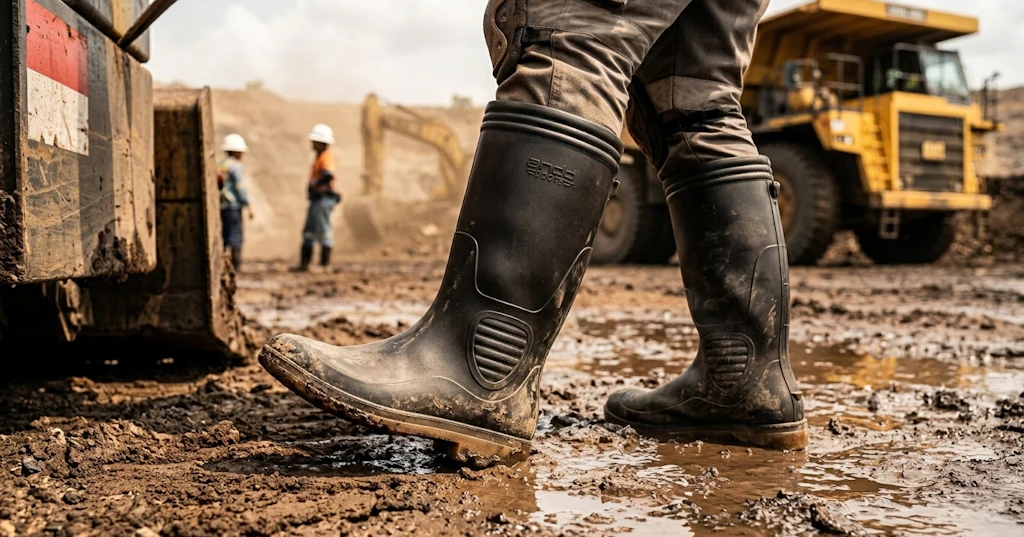
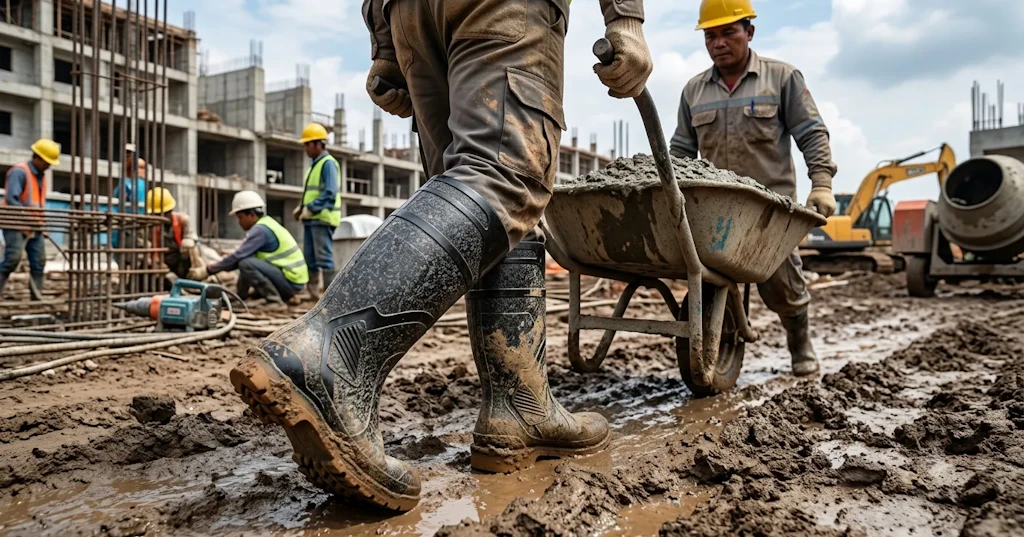
- Loss of Traction Due to Liquid Layers: Water, mud, and oil can form a thin layer between the floor surface and the shoe sole. If the shoe sole is not designed to break this layer, workers will instantly lose grip. Therefore, companies must provide anti-slip boots for hazardous areas that feature specially grooved outsole patterns to channel fluids away from the foot’s pressure points.
- Exposure to Corrosive Substances and Material Degradation: Light chemicals, acids, or industrial oils not only threaten workers’ skin but can also damage PPE structure itself. Footwear made of ordinary fabric or rubber is prone to degradation, hardening, and cracking if continuously exposed to chemicals.
Risk Mitigation Implementation with Ando Boots
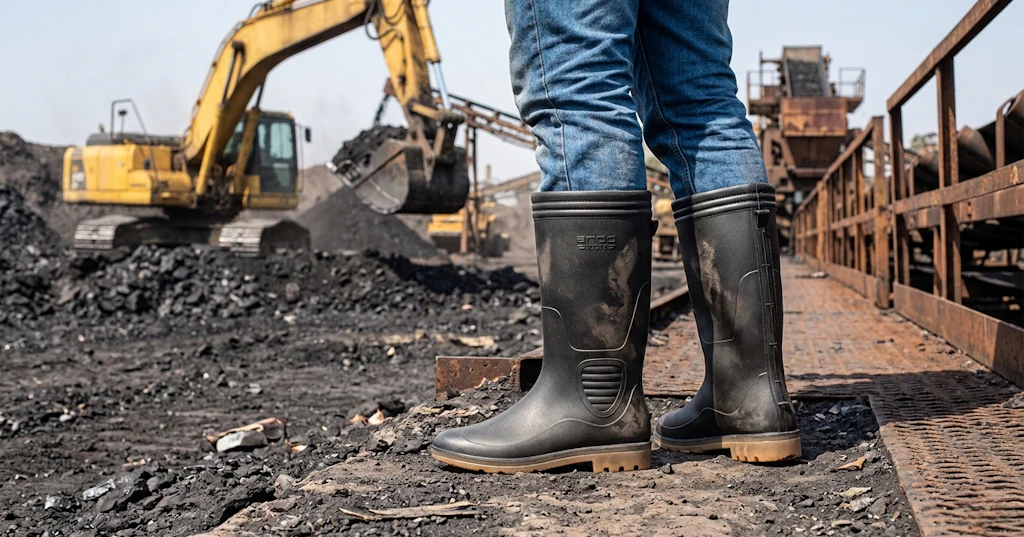
To reduce foot injuries in wet work areas, management should switch to protective materials with better mechanical resistance. The use of high-quality Polyvinyl Chloride (PVC) boots, such as those from Ando Boots, is a highly effective solution. High-quality PVC is 100% waterproof and offers good resistance to oil as well as mild chemicals.
In addition to superior material, the All Terrain traction safety feature on the soles of Ando Boots is designed to provide maximum grip on uneven or slippery surfaces. With crack-resistant material, the risk of hazardous liquids entering the foot area can be minimized. By selecting PPE specifications based on thorough risk analysis, your company is proactively implementing a foot injury risk mitigation program and building a strong workplace safety culture within the organization.