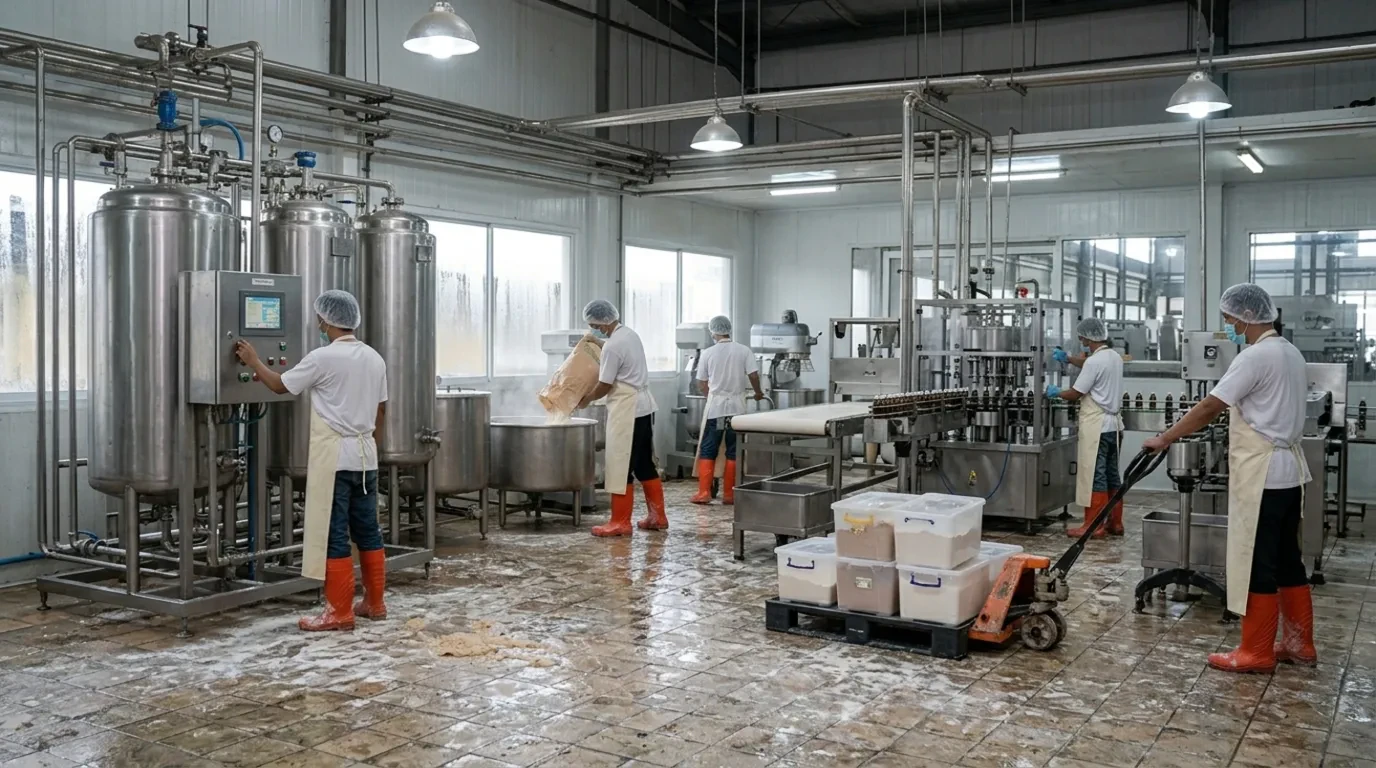
In the food and beverage (F&B) manufacturing and processing sector, strict sanitation protocols and hygiene control are top operational priorities. Food production facilities operate under rigorous global and national food safety frameworks, including HACCP (Hazard Analysis Critical Control Point) and Good Manufacturing Practices (GMP). Every component entering processing zones—including the Personal Protective Equipment (PPE) and footwear worn by operators—must be strictly monitored to prevent it from becoming a vector for cross-contamination.
For Quality Assurance (QA) Managers, Sanitation Coordinators, and Procurement Officers, selecting floor footwear for food processing plants requires close attention to hygienic properties, ease of decontamination, and physical slip resistance on wet, greasy surfaces. Specifying the right safety boot standards for food and beverage plants serves as a vital safeguard for maintaining overall product integrity.
Sanitation Challenges and Technical Criteria for Food Processing Footwear
Floors in meat processing, dairy production, bottling plants, and industrial commercial kitchens are routinely subjected to high-pressure washdowns, animal fats, cooking oils, and chemical sanitizers. To keep the facility sterile and safe, technical specifications for food processing industry work boots should address key requirements:
- Seamless, Non-Porous Surfaces for Easy Sterilization: Work boots must not have open fabrics or intricate stitching seams that can trap food particles, organic fats, and moisture. Molded Polyvinyl Chloride (PVC) boots offer smooth, 100% waterproof exteriors that can be washed, scrubbed, and sanitized using standard industrial disinfectant solutions.
- Resistance to Fats and Sanitizing Chemicals: Cleaning chemicals (such as chlorine solutions or industrial detergents) and organic oils quickly degrade conventional footwear materials. High-grade PVC compounds provide stable chemical resistance, preventing boots from hardening, cracking, or degrading prematurely.
- Slip-Resistant Traction on Wet Epoxy/Tiled Floors: Processing facilities frequently feature smooth tiled or epoxy flooring that becomes hazardous when wet. Equipping staff with slip resistant boots for wet areas featuring dedicated tread patterns ensures liquid dispersion and helps prevent workplace slips and falls.
Supporting Hygiene Compliance with Ando Boots
Ando Boots delivers protective footwear crafted from high-grade PVC engineered to meet demanding sector requirements, including food processing and agriculture. Thanks to non-absorbent material construction, Ando Boots can be rapidly rinsed and sanitized at hygiene checkpoints before personnel enter high-care processing zones.
Furthermore, the ergonomic Comfort Fit and Cool Feel features help reduce fatigue for operators standing for extended periods along production lines, maintaining comfort without compromising strict hygiene requirements. Partnering with Ando Boots as your trusted PVC work boot vendor helps your facility maintain continuous GMP compliance and pass hygiene audits with confidence.